Franjo Šeper

I · 1905–1981

Biography

Chapter i

Education

Franjo Šeper was born in 1905 in Osijek, into a modest family devoted to faith and work. In 1910 the family moved to Zagreb, where he attended the Kaptol primary school and the Lower Town Gymnasium, graduating in 1924.

While still at school he took part in the Catholic youth movements and was a member of the Marian Congregation run by the Jesuits in Palmotićeva Street.

His decision to devote himself to the priesthood owed much to his acquaintance with Ivan Merz, later beatified. Once he had chosen the priestly vocation, Archbishop Antun Bauer of Zagreb sent him to study in Rome, at the Pontifical German-Hungarian College (Germanicum et Hungaricum), where he took his doctorate in philosophy in 1927 and in theology in 1931.
1905–1930

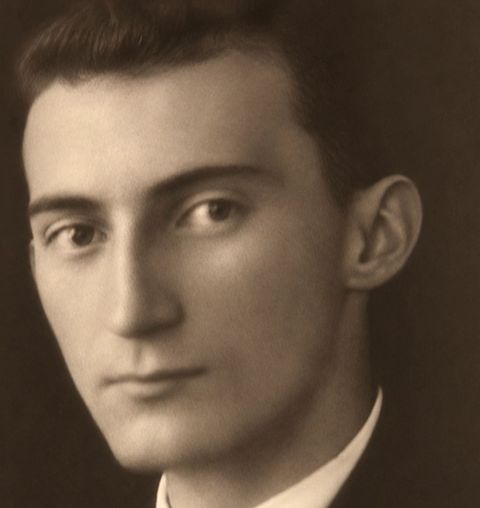
The young Franjo Šeper, three-quarter portrait, dark hair combed back.
The young Šeper · portrait from his student days · colourised photograph · frame from the film
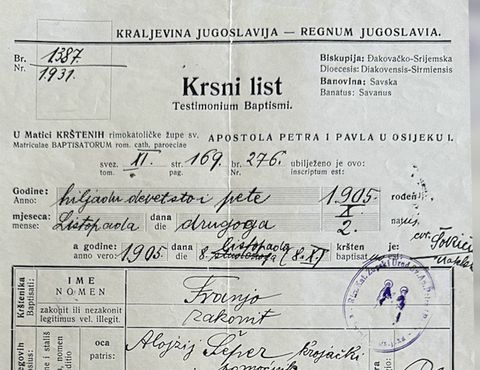
Baptismal certificate of the parish of Saints Peter and Paul in Osijek: Franjo, born 2 October 1905.
Baptismal certificate · Osijek, 1905 · frame from the film
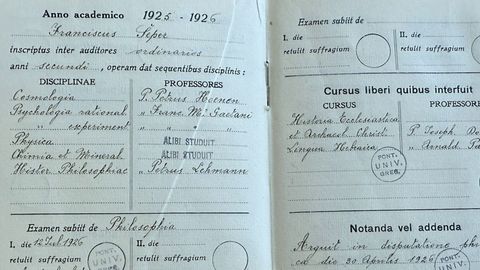
Record book of the Pontifical Gregorian University for the academic year 1925–1926, listing philosophy courses and university stamps.
Gregorian University record book · Rome, 1925–1926 · frame from the film
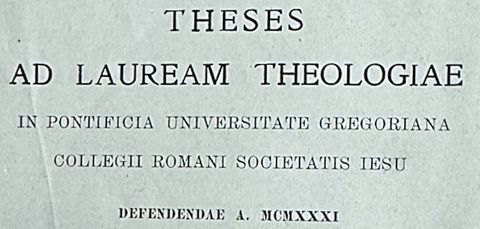
Title page of theses: Theses ad lauream theologiae in Pontificia Universitate Gregoriana, defendendae a. MCMXXXI.
Theses for the doctorate in theology · Gregorian University, 1931 · frame from the film

Chapter ii

Priest, Teacher, Secretary

He was ordained priest in Rome in 1930, at the same time as Blessed Alojzije Stepinac, seven years his senior, with whom he had shared his student days.

He returned to Zagreb in July 1931 and became a religion teacher at the First Girls’ Real Gymnasium.

From 1935 to 1941 he served as archiepiscopal secretary, first to Archbishop Bauer and then to Archbishop Stepinac.

1930–1941

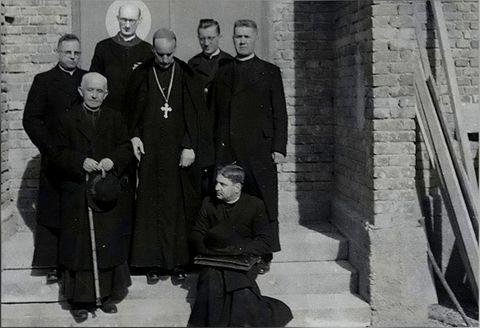
Group photograph of priests on steps in front of a brick wall; in the middle an archbishop with a pectoral cross.
The secretary years · with Archbishop Stepinac · frame from the film
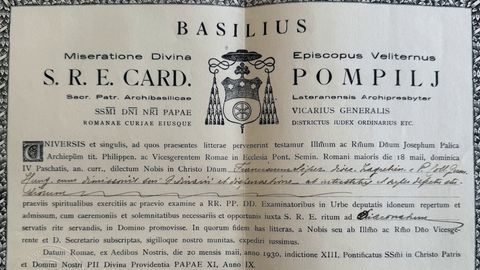
Latin certificate of ordination from Cardinal Basilio Pompilj, Vicar General of Rome, signed in Rome in 1930.
Certificate of ordination · Rome, 1930 · frame from the film
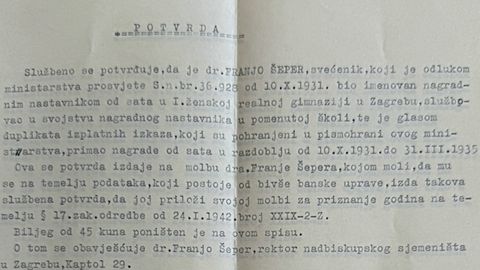
Typewritten certificate that Dr Franjo Šeper taught at the First Girls’ Real Gymnasium in Zagreb from 10 October 1931 to 31 March 1935.
Certificate of teaching service · First Girls’ Real Gymnasium, 1931–1935 · frame from the film
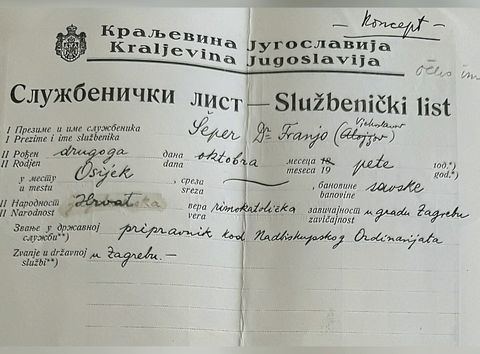
Handwritten civil-service record of the Kingdom of Yugoslavia: Šeper, Dr Franjo, born in Osijek, trainee at the Archiepiscopal Ordinariate in Zagreb.
Civil-service record · Archiepiscopal Ordinariate, Zagreb · frame from the film

Chapter iii

Rector and Removal

From 1941 to 1951 he was rector of the Archdiocesan Theological Seminary in Zagreb. He had to leave this post at the demand of the Yugoslav communist authorities. He was also convicted in a trial and kept under watch and surveillance by the police and the services of the communist regime.

1941–1951

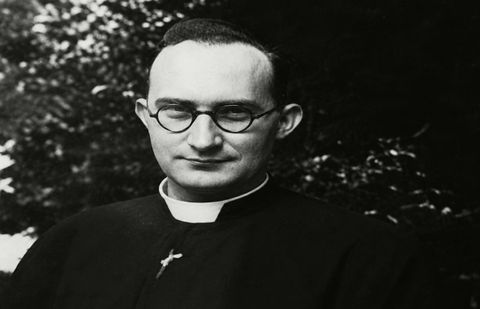
Franjo Šeper in clerical dress and round glasses, smiling, with trees behind him.
Seminary rector · 1941–1951 · frame from the film
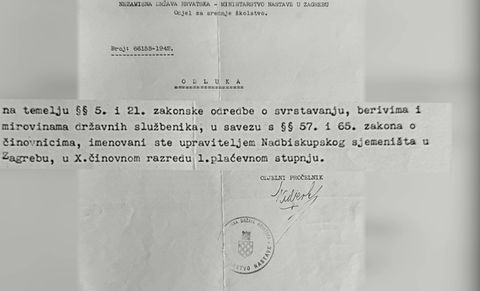
Typewritten decision of the Ministry of Education from 1942 appointing him director of the Archiepiscopal Seminary in Zagreb, with stamp and signature.
Decision appointing him seminary director · 1942 · frame from the film
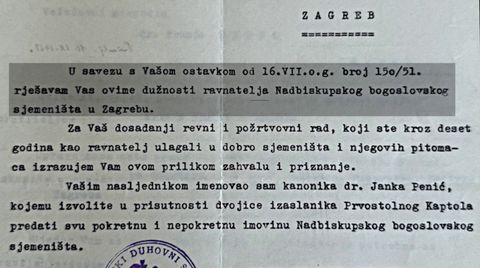
Typewritten letter from Zagreb which, referring to the resignation of 16 July, relieves him of the post of seminary director; Canon Dr Janko Penić is named his successor.
Release from the post of director · Zagreb, 1951 · frame from the film
Transcript of the document

U savezu s Vašom ostavkom od 16. VII. o. g. broj 150/51 rješavam Vas ovime dužnosti ravnatelja Nadbiskupskog bogoslovnog sjemeništa u Zagrebu.

Za Vaš dosadanji revni i požrtvovni rad, koji ste kroz deset godina kao ravnatelj ulagali u dobro sjemeništa i njegovih pitomaca, izrazujem Vam ovom prilikom zahvalu i priznanje.

Vašim nasljednikom imenovao sam kanonika dr. Janka Penića, kojemu izvolite u prisutnosti dvojice izaslanika Prvostolnog Kaptola predati svu pokretnu i nepokretnu imovinu Nadbiskupskog bogoslovnog sjemeništa.

Transcribed from the film frame, in the original Croatian; […] marks an illegible or cut-off part.

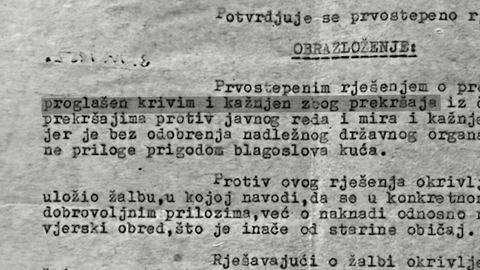
Typewritten ruling on an appeal: found guilty of an offence and fined for accepting contributions at house blessings without approval from the state authorities.
Ruling on an offence · fined over contributions at house blessings · frame from the film
Transcript of the document

Potvrđuje se prvostepeno r[ješenje …]

OBRAZLOŽENJE:

Prvostepenim rješenjem o pre[kršaju …] proglašen krivim i kažnjen zbog prekršaja iz [… zakona o] prekršajima protiv javnog reda i mira i kažnje[n …] jer je bez odobrenja nadležnog državnog organa [… dobrovolj]ne priloge prigodom blagoslova kuća.

Protiv ovog rješenja okrivlj[eni je] uložio žalbu, u kojoj navodi, da se u konkretnom [slučaju nije radilo o] dobrovoljnim prilozima, već o naknadi odnosno [… za] vjerski obred, što je inače od starine običaj.

Rješavajući o žalbi okrivlje[nog …]

Transcribed from the film frame, in the original Croatian; […] marks an illegible or cut-off part.

Chapter iv

Parish Priest in Trnje

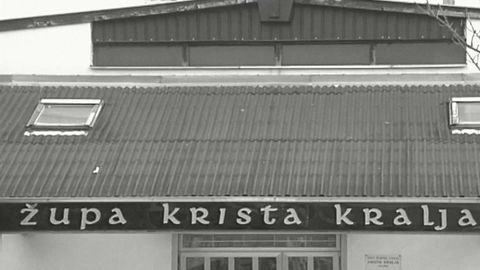
From 1951 to 1954 he was parish priest of Christ the King in Trnje, Zagreb, where he showed great compassion for his poor parishioners.

1951–1954

The sign ’Župa Krista Kralja’ on the front of a low building with a corrugated roof.
Christ the King parish · Trnje, Zagreb · frame from the film

Chapter v

Bishop and Archbishop

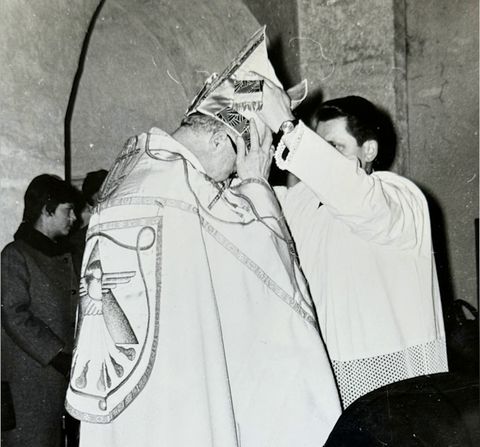
In 1954 Pope Pius XII appointed him bishop, and in 1960, after the death of Archbishop Stepinac, he succeeded him as Archbishop of Zagreb.

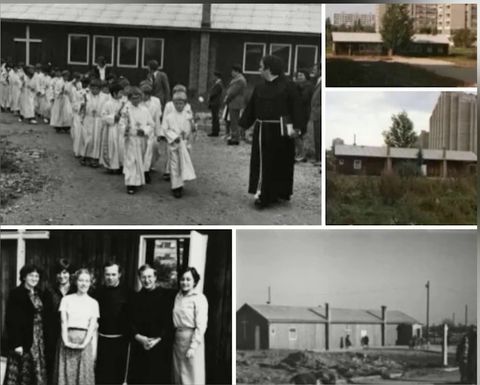
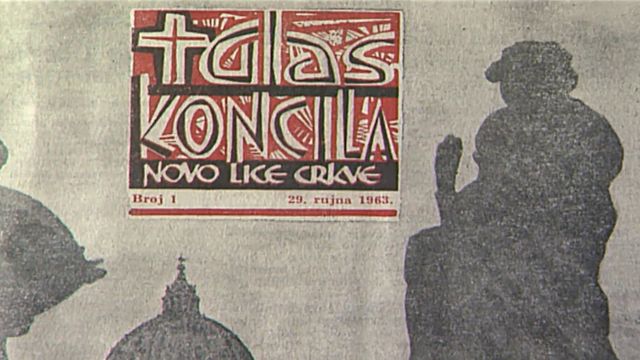
His ministry was marked by the founding of 21 parishes and the opening of pastoral centres in flats in newly built Novi Zagreb, since the authorities did not allow churches to be built. In those years the fortnightly Glas Koncila was launched, and he both worked with and argued with theologians connected to the publisher Kršćanska sadašnjost.

1954–1969

Episcopal ordination: a mitred bishop lays his hands on the head of Franjo Šeper, who bows in white vestments.
Episcopal ordination · 1954 · frame from the film
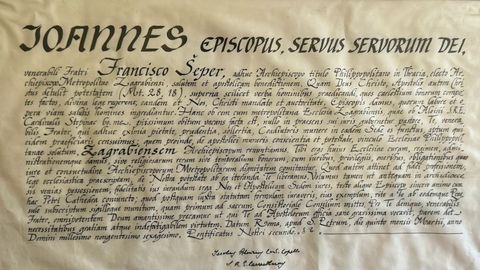
Latin bull of Pope John XXIII in calligraphy, with the name Francisco Šeper and the word Zagrabiensem.
Bull appointing him Archbishop of Zagreb · John XXIII, 1960 · frame from the film
Collage of four photographs: a First Communion procession in front of a prefabricated church, low huts and the new housing blocks of Novi Zagreb.
New parishes in Novi Zagreb · huts and flats instead of churches · frame from the film
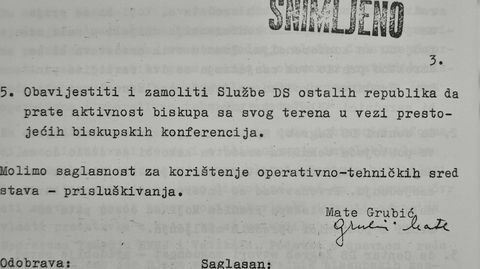
Typewritten State Security document stamped SNIMLJENO: it asks for the bishops’ activities to be monitored and for approval to use wiretapping; signed Mate Grubić.
Order for surveillance · State Security Service · frame from the film
Transcript of the document

SNIMLJENO

5. Obavijestiti i zamoliti Službe DS ostalih republika da prate aktivnost biskupa sa svog terena u vezi prestojećih biskupskih konferencija.

Molimo saglasnost za korištenje operativno-tehničkih sredstava – prisluškivanja.

Mate Grubić

Odobrava: Saglasan:

Transcribed from the film frame, in the original Croatian; […] marks an illegible or cut-off part.

Masthead of the first issue of Glas Koncila, 29 September 1963, reading ’Novo lice Crkve’ (The New Face of the Church); behind it the shadows of a dome and a praying figure.
Glas Koncila, issue 1 · 29 September 1963 · frame from the film

Chapter vi

The Second Vatican Council

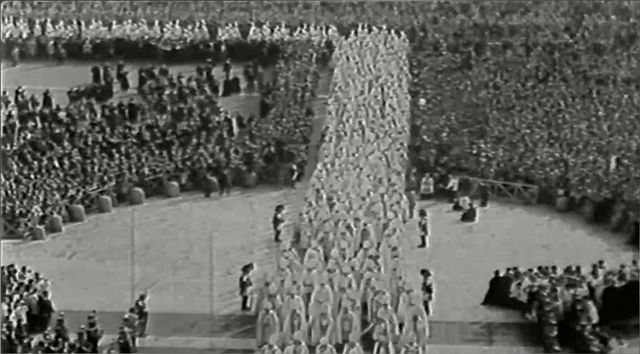
St Peter’s Basilica from above: a long procession of bishops in white mitres passes between stands full of Council Fathers.
The Second Vatican Council · 1962–1965 · frame from the film

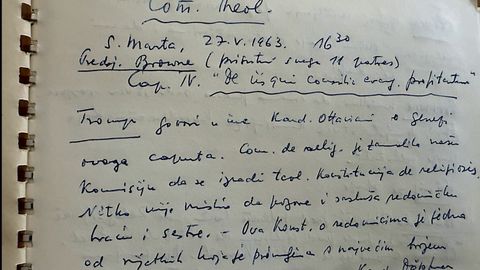
At the Second Vatican Council, held from 1962 to 1965, the largest gathering of bishops and theologians in the history of the Catholic Church, he stood out for his interventions, was elected a member of the Council’s principal Theological Commission and was one of the important builders of the conciliar documents. During the Council he also kept a personal diary, a valuable record of that great assembly.

He also took part in shaping the Decree on Ecumenism, the document that opened new doors to dialogue among Christians.

1962–1965

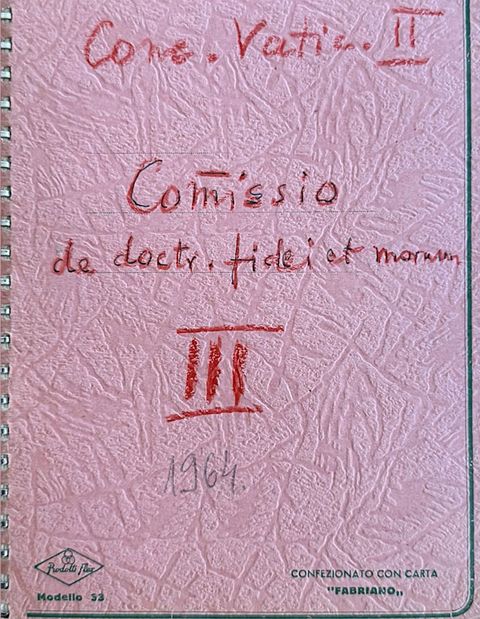
Pink notebook cover inscribed by hand: Conc. Vatic. II, Commissio de doctr. fidei et morum, III, 1964.
Cover of the Council diary · 1964 · frame from the film
A page of a handwritten diary in a spiral notebook, dated 27 May 1963, with notes on the work of the Theological Commission.
Council diary · entry of 27 May 1963 · frame from the film

Chapter vii

Cardinal

In 1965 Pope Paul VI created Šeper a cardinal, giving him the Roman church of Saints Peter and Paul as his title.

In 1966 the Holy See and Yugoslavia signed a Protocol by which they exchanged representatives and settled some questions concerning the position of the Church. Šeper voiced his disagreement with this arrangement because of Tito’s treatment of the Catholic Church and of Cardinal Stepinac. He nevertheless gave way at the Holy Father’s request and took part in the Protocol as the highest-ranking churchman of the country from which the delegation came. Full diplomatic relations were established four years later, in 1970.

1965–1970

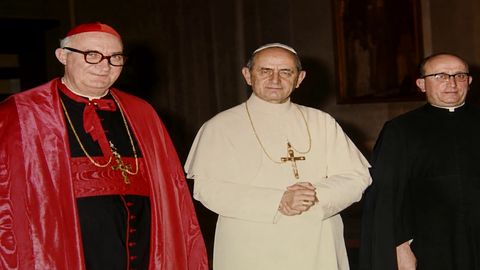
Cardinal Šeper in red, Pope Paul VI in white and a priest in black standing side by side.
With Pope Paul VI · colourised photograph · frame from the film
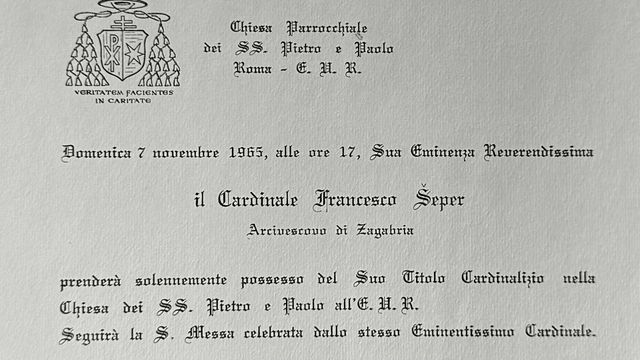
Printed invitation: on Sunday 7 November 1965 Cardinal Franjo Šeper takes possession of his titular church of Saints Peter and Paul in Rome; top left, his coat of arms with the motto Veritatem facientes in caritate.
Invitation to his titular church, with coat of arms and motto · Rome, 7 November 1965 · frame from the film

Chapter viii

Prefect of the Congregation for the Doctrine of the Faith

In 1968 Pope Paul VI appointed him Prefect of the Sacred Congregation for the Doctrine of the Faith. No Croat had ever been chosen for so high a position in the Catholic Church. It was one of the most responsible posts in the Church, at a time of heated theological debate and re-examination.

Accepting this important office, he moved to Rome, and Franjo Kuharić took over as Archbishop of Zagreb.

In his new office he faced the task of shaping the Congregation in a new way and introducing different working methods, in keeping with the new name Pope Paul VI had given it at the close of the Council, in 1965. His successor, Cardinal Joseph Ratzinger, described his thirteen years at its head as exceptionally valuable, for bringing a spirit of dialogue, close cooperation with the bishops and an atmosphere of friendship in which the Congregation’s work bore fruit.

Cardinal Šeper was the first high-ranking churchman to argue for normalising relations between the Vatican and Israel.

1968–1981

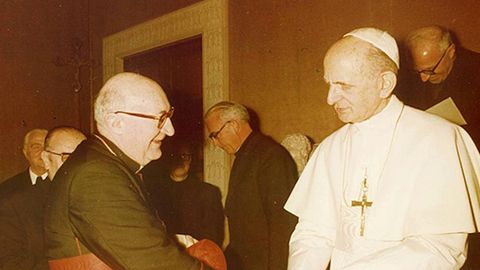
Cardinal Šeper, smiling, shakes hands with Pope Paul VI in a room full of priests.
With Pope Paul VI · Rome · colourised photograph · frame from the film
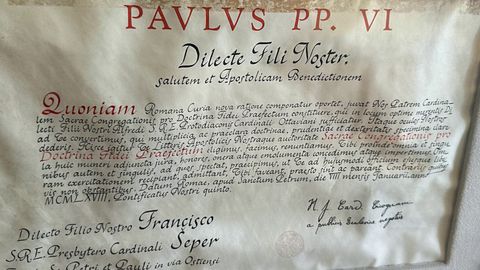
Latin brief of Pope Paul VI, Dilecte Fili Noster, appointing Cardinal Šeper Prefect of the Sacred Congregation for the Doctrine of the Faith.
Brief appointing him Prefect · Paul VI, 1968 · frame from the film

Chapter ix

Thirteen Centuries of Christianity among the Croats

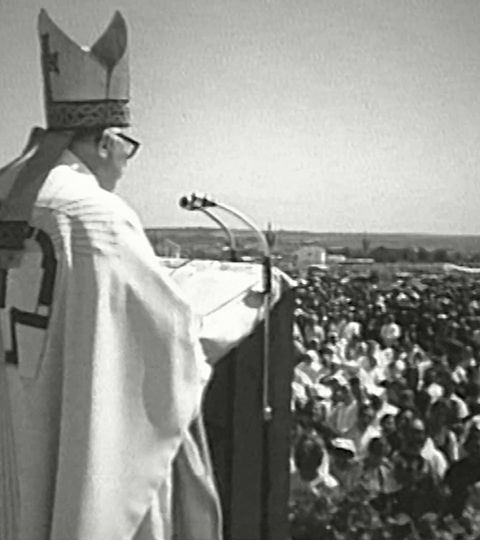
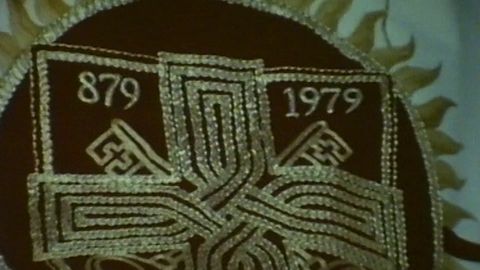
Cardinal Šeper also played a prominent part in organising the celebration of thirteen centuries of Christianity among the Croats, the greatest event of the Church in Croatia in the 20th century, which brought together hundreds of Croatian faithful at large celebrations across Croatia.

Cardinal Šeper, mitred, speaking into a microphone from an open-air altar before a vast crowd.
Open-air celebration · thirteen centuries of Christianity among the Croats · frame from the film
Embroidered emblem with Croatian interlace and the years 879 and 1979.
Jubilee emblem · 879–1979 · frame from the film

Chapter x

Death and Return to Zagreb

He died in Rome in 1981. Pope John Paul II celebrated his funeral Mass in St Peter’s Basilica.

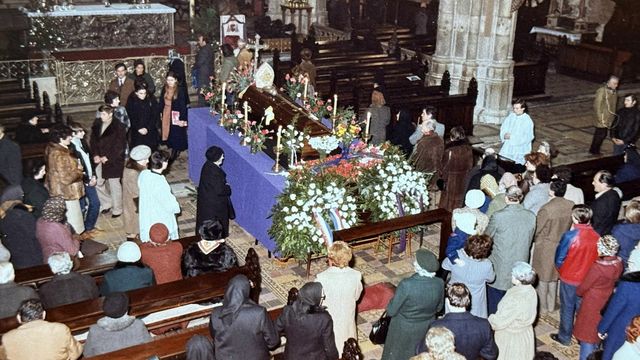
At his own wish his body was returned to Zagreb and, after many of the faithful had taken leave of him in front of the cathedral, his remains were laid in the tomb of the archbishops of Zagreb, beside the coffin of Cardinal Stepinac.

1981

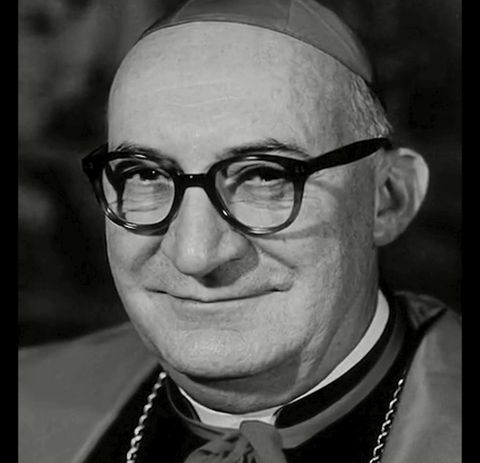
Black-and-white portrait of Cardinal Šeper in later years, with zucchetto and glasses, smiling.
He left quietly · frame from the film
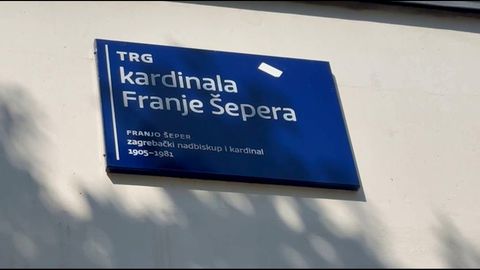
Blue street sign: Trg kardinala Franje Šepera (Cardinal Franjo Šeper Square), Franjo Šeper, Archbishop of Zagreb and cardinal, 1905–1981.
Cardinal Franjo Šeper Square · Zagreb · frame from the film
A coffin covered in flowers in Zagreb Cathedral; the faithful file past to take their leave.
Farewell in the cathedral · Zagreb Cathedral · colourised photograph · frame from the film
Letter

A collection of documentary films

Great Figures of the Church in Croatia

4 lives. 4 testimonies. 5 films. More than 6 hours of history worth preserving.

For the first time in one place: unique film and archive material on the great figures of the Church in Croatia and on Croatian saints, blesseds and martyrs.

Films in the collection

  1. Franjo Šeper the film on this site

    The man who rose from Zagreb to the very top of the Holy See.

    The first film ever made about Franjo Šeper, Archbishop of Zagreb and cardinal: his life, his service to the Church and his historic role as the first Croatian to head the Congregation for the Doctrine of the Faith.

    Cardinal Franjo Šeper
  2. Alojzije Stepinac

    A faith that did not bow to political pressure.

    Through archive footage and testimonies, discover the life, work and suffering of Blessed Alojzije Stepinac, one of the strongest witnesses of faith in Croatian history.

    Cardinal Alojzije Stepinac
  3. Franjo Kuharić

    A voice of kindness, hope and forgiveness in hard times.

    The life and messages of Cardinal Franjo Kuharić, a pastor whose words and example shaped the Church in Croatia in the second half of the 20th century.

    Cardinal Franjo Kuharić
  4. Nikola Eterović

    From the island of Brač to the highest offices of the Holy See.

    The life of Archbishop Nikola Eterović and his wide experience in the Church and in diplomacy on the international stage.

    Archbishop Nikola Eterović
  5. Holy Croatia

    People who lived their faith to the end.

    The story of Croatian saints, blesseds and martyrs, witnesses of faith whose lives still inspire today. The film brings valuable material on their legacy and their place in Croatian Church history.

    Saint Leopold Bogdan MandićA nun holding a crucifixPortrait of a young man in a suitA priest in a surplice

More than 6 hours of valuable content

5 documentary films · unique archive material · history · faith · testimony

A collection not only for watching, but for keeping, learning from and passing on to future generations.

Excellent material for religious education, schools, parishes, libraries, families and anyone who wants to know more about Croatia’s Church and national heritage.

Letter from Jakov Sedlar

Dear Sir or Madam,

For years, people from many places have asked us where they can find films of religious and spiritual content that serve as a reminder, and as proof, of how much the highest Croatian Church dignitaries did to preserve the faith and Croatian national identity. We have therefore decided to put five films that bear witness to exactly that on a single USB stick. The immediate occasion is the newly completed film about Cardinal Franjo Šeper, who held the highest office of any Croatian Church dignitary in the history of the Holy See: Prefect of the Congregation for the Doctrine of the Faith. With him, Cardinal and Blessed Alojzije Stepinac, Cardinal Franjo Kuharić and Archbishop Nikola Eterović, we are convinced that the right choice has been made. Alongside this magnificent quartet, the fifth film, “Holy Croatia”, tells of all the Croatian saints, blesseds and martyrs.

We believe that these four great figures of recent history can be an excellent example to new generations, who may find much that is good to inspire them in their lives and fates.

This unique six-hour collection of films is also well suited to religious education, and we hope it will be well received in many Croatian parish communities.

One USB stick costs €30, and the net proceeds will go towards new films with similar aims. Given the devotion to the Mother of God among the Croatian people, the first will be a film about Croatian Marian shrines.

You can order the USB stick by e-mail at
hrvatski.velikani52@gmail.com
or by mobile phone on
+385 91 951 1283

If you like the reason this USB was made, please recommend it to your friends.

Thank you!

Jakov Sedlar